Health and Safety
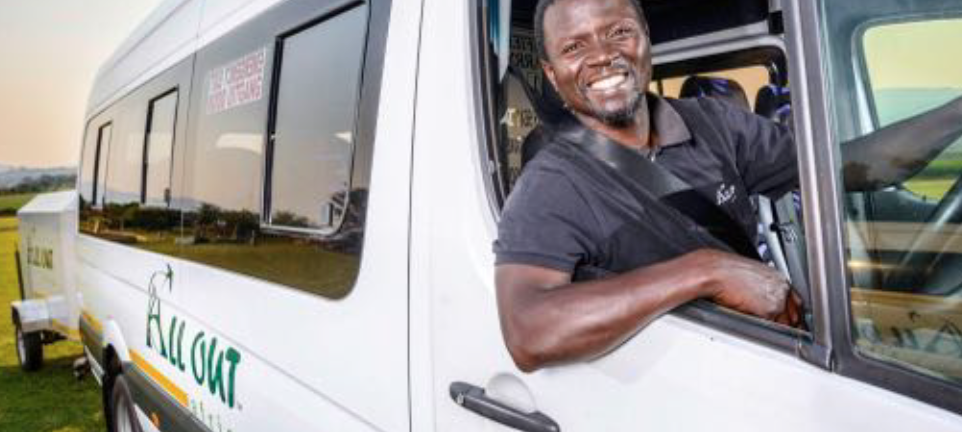
Ground Transportation Company: All-Out Africa
With regards to our vehicles and safety. I think the best endorsement you can give is that we pass the vehicle safety audits for the global leader is schools expeditions: World Challenge Expeditions. World Challenge Expeditions have very high vehicle safety standard and we pass an online audit which is updated every 3 years.
- Vehicles kept in good condition – not kept longer than 10 years of age
- Vehicles serviced at official dealerships only – and serviced at the standard required intervals
- Vehicles are licensed to carry passengers and have a government issued “Certificate of Fitness” which is renewed every 6 months after an inspection
- Drivers have a Public Drivers Permit (PDP) which requires them to have an annual medical check-up to ensure they are fit for driving passengers
- Drivers must have a minimum of 5 years driving experience in order to have a PDP
- Drivers are not permitted to come to work or drive under the influence of drugs or alcohol (aligned with the laws of the country)
- Drivers must adhere to the road laws at all times while driving
- All seats in vehicles are fitted with seat belts
- All vehicles covered by comprehensive vehicle insurance
- All vehicles have passenger liability insurance
- The company has public liability insurance
- Each vehicle has live vehicle tracking which monitors location, speed and driving style in real time

First Aid
At all times there will be a staff member in attendance who is current in basic first aid training to a North American standard. There will be a comprehensive first aid kit within our vehicles along with emergency plans to move a participant with an injury or issue to first world private care.
Private High-Quality Medical Care
Available in several locations around the country. At no point will we be more than an hour from emergency care, and for the majority of the time, within 20 minutes. The doctors onsite are all foreign trained and there are specialists in all fields. Clinics are available in: Manzini, Matsapha, Ezulwini Valley and Mbabane.
https://theclinicgroup.org/manzini-clinic/
https://eph-sz.com/
Food Safe
Staff at Jacaranda Journeys are all trained to BC Food Safe standards.
Drinking Water
Participants drink only bottled water, as produced in a first world processing plant. Ice cubes are also safe to use, as they are produced from the same facility.
Eswatini Water Services can be seen here:
Night Watchman
All accommodations have a minimum of one night watchman on duty at all times.
Allergies and Dietary Concerns
All efforts are made to be sensitive to any allergies or food sensitivities or aversions. We have dealt with nut allergies, celiac and gluten free issues, seafood, dairy, low carb etc. There are enough resources at the restaurants and grocery stores to accommodate any of these issues.
Sun Safety
All the obvious and current efforts are made to protect travelers from too much sun exposure. Specifically, participants are required to have waterproof sunblock rated SPF 30, hats and long-sleeved shirts.
Wild Animal Safety
While on safari participants are instructed by highly trained rangers on behavior and safety while on board the open safari vehicles. While wildlife is all around during these experiences, the risk is extremely low of any personal encounters. All these animals are acclimatized to seeing vehicles. The drivers are respectful and slow. Sleeping and eating while on safari is always within a gated community area. This is beyond a tiny risk. Monkeys or baboons could be the only real threat, and participants are instructed on how to behave near monkeys or baboons, how to keep belongings and food out of reach etc.Snakes
There are several species of poisonous snakes in Eswatini. They are located in the rural areas of the most part. Encountering a snake would be highly, highly unlikely. To put it in perspective, after 25+ years of traveling there, I have seen only one in the wild and it was a safe distance away. Snake awareness is also taught and there are emergency measures and antivenom available in Eswatini.
Spiders, Ticks, Bed Bugs & Mosquitos
Spiders: there are a few species of spider that can deliver a painful bite. They are hard to find and hard to be bitten by, usually found in log piles or the bush, or maybe in your shoes in the morning. Some basic warnings are all that is needed to avoid such. First aid would be available for such an event.
Scorpions: even more rare than spiders and the same precautions such as checking your shoes in the morning or not moving around rocks and branches in the bush would prevent contact. First aid would be available in the event of this; however unlikely it might be.
Ticks: ticks and Tick Bite Fever are present in the area. Tick Bite Fever is much less serious than Lyme disease and is easily treated with a readily available antibiotic. Participants are taught how to reduce risk by wearing long pants and socks, using insect repellent, and properly handling clothing after hiking. Exposure is limited to hiking areas only; ticks are not present in urban areas or on our work sites.
Bed bugs: We have never heard of bed bugs in Eswatini.
Mosquitos that can carry malaria are present during the rainy season and only in the lowveld. Rainy season is November to early March. Participants will not be in the lowveld while in Eswatini, and they may be in the lowveld within Kruger National Park. Travelers are advised to make their own decisions regarding anti-malarial prophylaxis. Some would say that it is not necessary for stays in the lowveld that are as short as three days, but consulting your own travel clinic is advised.
Vaccinations
No specific vaccinations are needed or recommended for travel to this area.